What Happens When Customers Stop Searching?
We are witnessing one of the biggest discovery shifts since Google arrived.
Most trade businesses haven't noticed yet because everybody is looking at the technology instead of the effects on customer behaviour.
Open LinkedIn, YouTube or almost any business publication and you'll find endless discussions about AI. New tools. New features. New announcements. Everybody seems fascinated by what technology can do.
Meanwhile, something arguably more important is happening.
Customers are changing the way they look for answers.
A homeowner with a leaking roof no longer needs to guess which keywords might produce the best result. Someone planning a bathroom renovation no longer needs to spend an evening jumping between websites, reviews and social media profiles trying to work out who might be suitable.
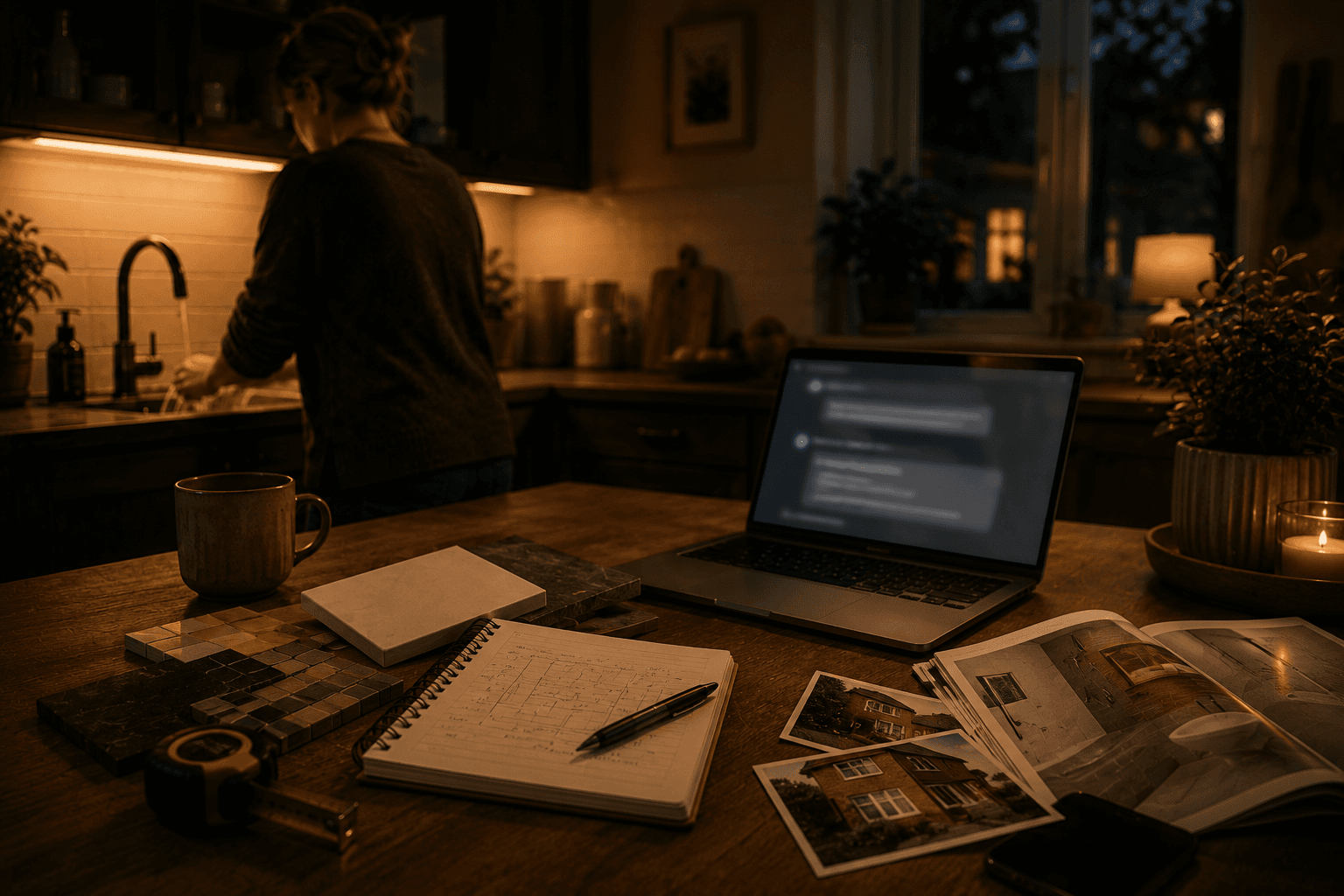
Increasingly, they can simply describe what they need. They can explain the problem, provide context, upload photographs and ask questions in the same way they would ask a friend, colleague or neighbour.
That may sound like a small change.
It isn't.
The moment a customer stops searching and starts asking, the entire process begins to change.
Imagine a homeowner uploads photographs of a Victorian property and asks for help finding somebody experienced in restoring timber windows. The platform now has to do far more than return a list of local businesses. It has to interpret the request, understand the type of work involved and decide which businesses appear most relevant.
That decision may happen in seconds.
The question is whether your business provides enough information for the right conclusion to be reached.
Perhaps the bigger question is what this means for the way businesses think about visibility.
For years, the objective was relatively simple. Rank higher. Appear first. Get found before competitors. Entire industries have been built around that idea.
But if customers increasingly ask platforms for recommendations rather than search for lists, being ranked number one may become a less important advantage than it once was. Because helping a customer choose between businesses requires more than a ranking. It requires understanding.
A platform needs to understand what a business does, what it specialises in, who it helps and why it might be a good fit for the request being made.
That does not mean search disappears. It does not mean rankings become irrelevant. It may simply mean that being clearly understood becomes just as important as being easily found.
Customers can already upload photographs, describe a project and ask platforms to help identify suitable businesses. Some AI systems can already complete tasks, place orders, make purchases and interact with other systems on behalf of users.
When those capabilities are combined with changing customer behaviour, the discovery process begins to look very different from the one many businesses are still optimising for today.
The question is no longer simply whether customers can find your business. Increasingly, it may be whether the right information exists for your business to be confidently suggested, compared and selected.
Right now, there is an exciting opportunity.
Businesses paying attention to customer behaviour may have the advantage.
While much of the conversation is focused on AI tools, announcements and new features, a more useful question might be this:
What happens when customers start using these technologies to find, compare and choose businesses?
Because the businesses that understand that shift early may find themselves in a very strong position over the next few years.
Not because they adopted every new tool. Not because they chased every headline. But because they recognised where customer behaviour was heading before it became obvious to everyone else.
A few years from now, many of the changes we are discussing today may simply feel normal.
The opportunity exists before that happens.
The businesses that benefit most from that future are unlikely to be the businesses that waited for it to arrive.
They are more likely to be the businesses that recognised the shift while everyone else was still debating whether it was real.
The headlines will continue to focus on AI.
We suspect the more important story is unfolding elsewhere.
In the way customers discover, compare and choose businesses.
Because when discovery changes, everything that follows tends to change with it.